
Corporate retreats give employees and leadership teams time to discuss business goals, build working relationships, and step away from their normal office routines. Whether a company is organizing a planning session, a leadership meeting, a team-building activity, or a multi-day gathering, transportation is an important part of the schedule.
In the Tri-Valley area of California, businesses may organize events in Pleasanton, Livermore, Dublin, San Ramon, or nearby East Bay communities. Attendees might travel from different offices, hotels, airports, and meeting venues. Without a clear travel plan, coordinating everyone’s arrival can become difficult.

Group transportation helps companies organize these movements around a shared schedule. With preparation, a transportation plan can reduce confusion, support punctual arrivals, and make it easier for employees to focus on the purpose of the retreat.
Tri-Valley Limousine serves the regional transportation market, making local routes, passenger coordination, and vehicle planning relevant considerations for businesses arranging group travel. This guide explains how to plan corporate retreat transportation in a practical and organized way.
1. Start with the Corporate Retreat Schedule
Before selecting vehicles or confirming pickup times, outline the complete event schedule. Transportation should support the retreat agenda rather than be planned separately from it.
List the important activities, including:
- Hotel check-in and arrival times
- Opening meetings and presentations
- Team-building sessions
- Lunch and dinner arrangements
- Off-site activities
- Networking events
- Evening returns to hotels
- Departure times on the final day
For each activity, record the address, the expected start time, and the approximate number of attendees who need transportation.
For example, a company might hold a morning meeting at a hotel in Pleasanton, schedule an afternoon team activity in Livermore, and organize dinner at a separate venue. Each movement should be included in the itinerary, even when the locations are relatively close together.
A complete schedule makes it easier to identify vehicle requirements, estimate travel time, and avoid conflicting pickup arrangements.
2. Confirm How Many People Need Transportation
The total number of retreat attendees does not always equal the number of passengers who need group transportation.
Some employees may drive themselves, stay at a nearby hotel, arrive at a different time, or travel directly from an office. Others may need transportation for the entire event.
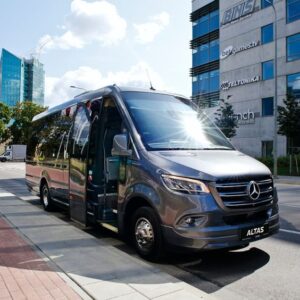
Divide attendees into groups based on their actual travel needs.
For example:
| Passenger group | Transportation requirement |
|---|---|
| Employees staying at Hotel A | Morning pickup and evening return |
| Employees staying at Hotel B | Separate hotel pickup |
| Local employees | Office or designated meeting-point pickup |
| Speakers or executives | Individual arrival schedule, if required |
| Employees attending only one session | Transportation for selected event times |
This approach helps prevent overbooking or reserving more capacity than necessary.
Ask attendees to confirm their transportation needs before finalizing the plan. Include a response deadline so the organizer has time to make adjustments.
3. Choose Pickup Locations That Work for Everyone
A well-planned pickup location should be easy to find, safe for passenger boarding, and suitable for the size of the vehicle.
For a corporate retreat, pickup points might include a company office, a selected hotel, a designated meeting point, or an agreed location near an event venue.

When deciding on a pickup point, consider:
- Whether the vehicle can legally and safely stop there
- The amount of space available for boarding
- Whether passengers can wait indoors or in a sheltered area
- The time required for the driver to enter and leave the location
- Whether the location is accessible to attendees with mobility needs
- Whether the pickup point is easy to describe in written instructions
Avoid choosing a pickup location solely because it looks convenient on a map. A narrow street, restricted driveway, or busy loading area may make passenger collection difficult.
Confirm access instructions with the hotel, office building, or venue before sending details to attendees. If the location is unfamiliar, provide a clear street address and a brief description of the meeting point.
4. Plan Routes Around the Tri-Valley Area
The Tri-Valley includes communities such as Dublin, Pleasanton, and Livermore, with connections to other East Bay business and residential areas. A retreat may also involve San Ramon, Danville, or transportation to and from a major airport.
Travel time should be estimated using the actual pickup and destination locations, rather than relying only on straight-line distance.
Allow time for factors such as:
- Morning and evening commute traffic
- Road construction or temporary closures
- Venue access and parking procedures
- Passenger boarding
- Multiple hotel stops
- Delays caused by attendees arriving late
- Time needed to unload and enter the venue
A route with several stops may require more time than expected, even if each individual stop appears close to the next. Review the complete sequence before confirming the departure time.
For a multi-stop itinerary, decide whether one vehicle should collect everyone in sequence or separate vehicles should serve different groups. The correct approach depends on the number of passengers, the event schedule, the available fleet, and the time required to complete each route.
Build reasonable time allowances into the itinerary instead of scheduling every movement with no margin for delay.
5. Select the Appropriate Vehicle Size
Vehicle selection depends on passenger numbers, luggage, travel distance, and the number of scheduled stops. A vehicle that works for a small leadership group may not be suitable for a larger employee gathering.
Before choosing transportation, consider:
Passenger capacity: Confirm the number of people expected on each trip. Do not calculate capacity based only on the total number of employees attending the retreat.
Luggage and equipment: Overnight retreats may involve suitcases, presentation materials, supplies, or other equipment. These items can affect available passenger and storage space.
Schedule: Groups that need to travel at different times may require separate vehicles or journeys.
Accessibility: Confirm any requirements related to mobility devices, step-free access, or boarding assistance before assigning vehicles.
Route conditions: Pickup areas and venue entrances may affect which vehicle types can access the location comfortably.
Tri-Valley Limousine provides fleet information at trivalleylimousine.com/our-fleet/. Use the available fleet details as a starting point, then confirm the vehicle’s actual capacity and suitability for the planned trip.
6. Coordinate Transportation with Hotel Reservations
Hotel arrangements and transportation plans should be reviewed together.

When attendees stay at multiple hotels, each property may have different check-in times, parking rules, pickup areas, and vehicle-access restrictions. A transportation plan should account for these differences rather than treating every hotel as an identical stop.
Create a record of:
- Hotel name and address
- Number of attendees staying there
- Required pickup time
- Designated loading location
- Destination for that trip
- Return transportation arrangements
- A contact person for hotel-specific questions
If a group is staying at a hotel outside the main retreat location, consider whether the additional travel time affects the meeting schedule.
Share the confirmed itinerary with attendees before the event. Employees should know whether they are expected to meet the vehicle at the hotel entrance, a designated parking area, or another location.
7. Prepare a Transportation Schedule for the Organizer
A written transportation schedule helps the company coordinator, event planner, and transportation provider work from the same information.
The schedule should list each movement in chronological order. It should contain sufficient detail to explain what needs to happen, when it needs to happen, and which passenger group is involved.
A simple format might look like this:
| Time | Pickup or destination | Passenger group | Notes |
|---|---|---|---|
| 8:00 AM | Hotel A | Group 1 | Morning departure |
| 8:20 AM | Hotel B | Group 2 | Confirm passenger count |
| 8:45 AM | Retreat venue | All groups | Opening session |
| 5:00 PM | Retreat venue | Hotel guests | Return transfer |
| 6:30 PM | Dinner venue | Registered attendees | Separate evening trip |
These times are illustrative only. Replace them with the actual schedule for the company event.
For a larger retreat, include the assigned vehicle, the responsible coordinator, and any special instructions. Make sure the schedule distinguishes between the time passengers should be ready and the time a vehicle is scheduled to depart.
8. Create a Communication Plan for Attendees
Even a well-organized transportation schedule can become confusing when employees receive incomplete or conflicting instructions.

Provide transportation details in one central location, such as the company event page, internal communication platform, or itinerary document.
Communicate the following details before the retreat:
- Pickup date and time
- Full pickup address
- Venue destination
- Expected travel duration, where known
- Contact person for questions
- Instructions for late arrivals
- Return-trip arrangements
- Any advance reservation requirements
Ask employees to check the details before the event. If the schedule changes, distribute the revised information promptly and identify what has changed.
Avoid sending multiple versions of the itinerary without explaining which one is current. A clearly dated version helps attendees and organizers avoid relying on outdated instructions.
For a large company event, designate one transportation coordinator to handle schedule questions and communicate with the transportation provider. This reduces the risk of receiving conflicting instructions from several departments.
9. Include Airport Arrivals When Necessary
Some corporate retreats bring together employees, speakers, clients, or leadership teams from different cities. These attendees may arrive through San Francisco International Airport (SFO), Oakland San Francisco Bay Airport (OAK), or San José Mineta International Airport (SJC), depending on their travel arrangements.

Airport transportation needs to be coordinated with flight information, arrival terminals, and the time required to reach the retreat destination.
Collect the relevant details from each traveler, including the airport, arrival date, scheduled landing time, and destination. Confirm whether passengers will be traveling individually or meeting other attendees for a shared transfer.
Do not schedule an airport pickup based only on the planned landing time. Allow for the arrival process and confirm the meeting instructions with the transportation provider.
Keep airport movements separate from regular hotel shuttle schedules unless the timing and route have been planned to accommodate both. Flight delays may affect the arrival schedule, while other attendees may need to reach a meeting at a fixed time.
For airport-related transportation details, review the applicable airport limousine information at Tri-Valley Limousine.
10. Plan for Schedule Changes
Corporate retreats often involve moving between different activities, and some parts of the agenda may take longer than expected. A meeting may overrun, a speaker may arrive late, or an outdoor activity may need to change because of weather.
A transportation plan should identify who has the authority to approve schedule changes and how those changes will be communicated.
Prepare for common situations by deciding in advance:
- Who contacts the transportation provider
- Who informs the attendees
- Whether an alternative departure time is possible
- How a delayed activity affects the next scheduled trip
- What happens if the passenger count changes
- How return transportation will be handled if an event ends early or late
Avoid making last-minute changes through several separate communication channels. The organizer should communicate one confirmed update to the relevant people.
It is also useful to identify which activities can move slightly and which have fixed start times. That distinction helps the coordinator prioritize transportation when the event agenda changes.
11. Confirm the Details Before the Event
A final review should take place before the retreat begins. This step helps identify errors while there is still time to correct them.
Check every pickup point, destination, scheduled departure, passenger count, and return trip. Verify the contact information for the company coordinator and the person managing transportation.
Confirm that the vehicles requested match the passenger requirements and that any special access or accessibility needs have been addressed.
The organizer should also ensure the itinerary has been shared with attendees and that employees know where to find the latest version.
For general service information and booking-related questions, review the relevant pages on Tri-Valley Limousine’s website and coordinate the specific itinerary before the retreat.
Conclusion
Planning group transportation for a corporate retreat requires coordination between the event schedule, passenger requirements, pickup locations, route timing, and venue arrangements. A structured plan helps employees reach meetings on time and allows organizers to spend less effort resolving travel questions during the event.
For businesses arranging a retreat in Pleasanton, Livermore, Dublin, San Ramon, or elsewhere in the Tri-Valley, the most useful approach is to confirm passenger numbers early, select suitable pickup points, allow reasonable travel time, and provide attendees with clear instructions.
A detailed transportation schedule, a single point of contact, and a final confirmation before the event can make group travel easier to manage. These steps help ensure that transportation supports the corporate retreat rather than becoming a distraction from its goals.


