
Daily employee transportation can be a challenge for companies with multiple office locations, shift schedules, or employees commuting from different parts of the Bay Area. Traffic congestion, parking limitations, and inconsistent arrival times can make it difficult for businesses to coordinate their workforce.
An employee shuttle service in Concord, CA offers companies a planned transportation option for moving employees between designated pickup locations, transit stations, parking areas, and workplaces. Instead of having every employee arrange transportation independently, businesses can organize shared rides around their operating schedules.
Employee shuttle transportation can support office teams, industrial facilities, healthcare organizations, corporate campuses, and businesses with employees working different shifts. Understanding how shuttle programs operate and what to consider before arranging one can help companies create a practical transportation plan.
Why Companies Consider Employee Shuttle Service in Concord, CA
Concord is an important employment and residential center in Contra Costa County. Employees may commute from nearby communities, travel between business locations, or rely on connections from public transportation.

For some organizations, providing a shared shuttle can help address specific commuting challenges. A scheduled vehicle can collect employees from an agreed location and transport them to the workplace.
Companies may consider employee shuttle transportation for several reasons:
- Reducing the number of individual vehicles arriving at the workplace
- Providing transportation from designated transit stations
- Supporting employees who do not drive
- Coordinating transportation for different work shifts
- Connecting remote parking areas with office entrances
- Organizing transportation for temporary projects
- Moving employees between nearby company locations
The need for a shuttle depends on the workforce, commuting patterns, and available transportation options. A company should evaluate its actual employee travel requirements before selecting a route or vehicle.
How an Employee Shuttle Program Works
An employee shuttle program is usually arranged around a defined route and operating schedule. The company identifies where employees need transportation, how frequently vehicles should operate, and which locations should be included.
A basic shuttle arrangement may involve the following steps:
- Identify employee transportation needs: Determine how many employees require transportation and where they are traveling from.
- Select pickup locations: Choose convenient and accessible meeting points.
- Establish operating hours: Match shuttle departures with employee reporting and departure times.
- Choose an appropriate vehicle: Select a vehicle based on passenger numbers and luggage or equipment requirements.
- Confirm the route: Review road conditions, pickup sequence, and estimated travel times.
- Communicate the schedule: Share pickup details and transportation instructions with employees.
The arrangement can be adjusted according to business requirements. Some companies need transportation only during morning and evening commuting hours, while others require vehicles throughout the day.
Employee Transportation Between Concord and Nearby Business Areas
Businesses in Concord may employ people who live in different communities throughout the region. A shuttle route can be planned around the locations where employees are concentrated.
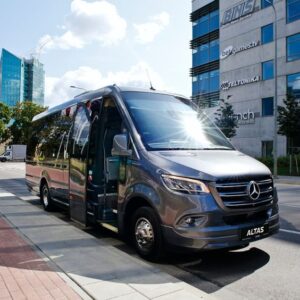
Depending on the workforce and workplace address, a transportation plan may include connections between Concord and nearby communities such as Pleasant Hill, Walnut Creek, Lafayette, San Ramon, or Danville.
A route should be designed around actual employee demand rather than simply including as many stops as possible. Too many pickup locations can increase journey times and make employees arrive later than expected.
When planning a route, companies should consider:
- The number of employees at each pickup point
- Distance between pickup locations
- Road access and safe stopping areas
- Morning and evening traffic patterns
- Workplace entry and parking arrangements
- Expected travel time for each passenger
A smaller number of well-selected stops may provide a more efficient arrangement than a route with numerous low-demand locations.
Shuttle Transportation for Different Employee Shifts
Not every business operates on a standard nine-to-five schedule. Manufacturing facilities, healthcare organizations, warehouses, hotels, and other businesses may operate early mornings, late evenings, weekends, or overnight.

These organizations may require transportation that matches their shift changes.
For example, a company with morning and evening shifts may need one shuttle before the morning reporting time and another after the evening shift ends. A facility operating around the clock may need several scheduled departures.
When planning shift-based transportation, businesses should consider:
Morning Shifts
Employees may need transportation before normal public transit services become frequent. Early pickup arrangements can help workers reach the facility before their scheduled start time.
Evening Shifts
Employees finishing work late may have fewer transportation options. A scheduled shuttle can provide a planned journey to designated drop-off locations.
Overnight Operations
Businesses with overnight employees should review route safety, pickup arrangements, and operating requirements carefully. Schedules should allow enough time for shift changes and vehicle preparation.
Weekend and Holiday Schedules
Some organizations operate different staffing levels on weekends and holidays. Shuttle services should be arranged around confirmed employee attendance rather than assuming that weekday demand will remain the same.
Choosing the Right Vehicle for Employee Shuttle Service
Vehicle selection is an important part of organizing employee transportation. The right option depends on passenger numbers, route length, travel frequency, and available pickup space.

Passenger Vans
Passenger vans may be suitable for smaller teams or routes with a limited number of employees. They can provide a practical option for connecting a transit station, parking area, or nearby residential pickup point with a workplace.
Sprinter-Style Vehicles
A larger passenger van may be appropriate for businesses that need to transport a medium-sized group together. It can also be useful for temporary employee transportation or travel between company locations.
Mini Buses
Mini buses can be considered when employee numbers exceed the practical capacity of a smaller vehicle. They may suit companies with several departments or a concentrated group of employees traveling along the same route.
Full-Size Buses
Larger buses may be appropriate for high-volume employee transportation, corporate campuses, or organized group commuting programs.
Before booking, businesses should confirm the vehicle’s actual seating capacity, luggage requirements, accessibility arrangements, and permitted operating conditions. The number of seats should be suitable for the expected passenger count without exceeding the vehicle’s capacity.
Employee Shuttle Service for Corporate Offices
Office-based businesses may have employees commuting from different neighborhoods or nearby cities. Some companies also have visitors, temporary workers, or teams that need transportation between office locations.
A corporate shuttle can be organized around recurring schedules or specific business requirements.
For example, an office may arrange transportation from a designated parking area to its building during peak arrival times. Another company may need a scheduled vehicle to connect two offices for employees attending meetings.
A corporate transportation plan should identify:
- Regular office operating hours
- Employee attendance patterns
- Pickup and drop-off locations
- Number of passengers per departure
- Required vehicle size
- Expected waiting time
- Procedures for schedule changes
Companies should also determine whether the shuttle will operate continuously, at fixed departure times, or only when reservations are made.
Transportation for Industrial and Warehouse Employees
Industrial facilities and warehouses can have transportation requirements that differ from office environments. Employees may work rotating shifts, and some facilities may be located away from major residential or transit areas.

A shuttle program can connect workers with designated meeting points and provide scheduled transportation to the facility.
For these operations, timing is especially important. Employees need to arrive before shift handovers, equipment preparation, and other scheduled activities.
Companies should review the following details:
- Whether the pickup location is accessible to the vehicle
- Whether the route can accommodate the required arrival time
- How many workers use each departure
- Whether employees carry work equipment
- How the schedule changes between shifts
- Whether additional transportation is needed during peak periods
The route should also account for facility access procedures. Security gates, employee entrances, and designated passenger drop-off areas should be confirmed before the service begins.
Planning Employee Shuttle Routes Around Traffic
Traffic conditions can influence employee shuttle schedules, particularly during morning and evening commuting periods.
A route that appears short on a map may take longer during peak travel hours. Road construction, accidents, school traffic, and special events can also affect journey times.
Businesses should avoid creating schedules that leave no room for delays.
A practical route-planning process includes:
- Reviewing the locations employees need to reach.
- Identifying the most suitable pickup sequence.
- Checking typical traffic conditions during operating hours.
- Estimating the time required at each stop.
- Allowing a reasonable buffer before the employee reporting time.
- Reviewing the route after the shuttle program begins.
If a company has several pickup points, it may be useful to test the proposed route before implementing a recurring schedule.
What Businesses Should Check Before Booking
Selecting an employee shuttle provider requires careful review of operational details. Companies should compare transportation arrangements based on their workforce requirements, vehicle needs, and service conditions.

Vehicle Capacity
Confirm the number of passengers the assigned vehicle can legally and comfortably accommodate.
Route Flexibility
Ask whether pickup locations can be adjusted when employee commuting patterns change.
Scheduling Options
Check whether the service can operate at the required times, including early mornings, evenings, weekends, or multiple shifts.
Pricing Structure
Understand whether the transportation quote is based on hourly service, distance, a recurring schedule, or another pricing method. Ask about waiting time, additional stops, tolls, and schedule changes.
Insurance and Operating Requirements
Confirm that the transportation provider meets applicable commercial operating, insurance, and licensing requirements.
Communication
Establish how employees and company coordinators will receive schedule updates and report delays or changes.
Cancellation and Modification Policies
Review how changes to passenger numbers, pickup times, and operating dates are handled.
These checks can help businesses understand what is included in the transportation arrangement and avoid misunderstandings after the service begins.
How to Estimate Employee Shuttle Requirements
Before requesting a quote, companies should prepare a basic overview of their transportation needs.

Start by identifying the total number of employees who may use the shuttle. Then divide them according to their usual reporting times and pickup areas.
For example, a business may have:
- Employees arriving for a morning shift
- A smaller group starting in the afternoon
- Workers finishing late in the evening
- Employees traveling between two company locations
Each group may require a separate departure or a shared route, depending on the passenger count and schedule.
The company should also distinguish between the maximum number of employees and the number expected to use the service on a typical day. This helps determine whether one vehicle, multiple departures, or different vehicle sizes may be appropriate.
A transportation provider can review these details and discuss possible arrangements.
Improving Employee Communication and Shuttle Coordination
Even a well-planned shuttle route can create confusion if employees do not know where or when to board.
Companies should share clear transportation instructions before the program starts.
An employee shuttle notice should include:
- Pickup address and meeting point
- Scheduled departure time
- Expected arrival time
- Vehicle identification details
- Contact information for assistance
- Instructions for reporting delays or missed pickups
- Rules regarding late arrivals and passenger changes
For recurring programs, businesses can maintain an updated employee transportation list. This list should reflect current passenger requirements and should be handled according to the company’s privacy and information-management practices.
When schedules change, employees should receive updates as early as possible.
Employee Shuttle Service in Concord, CA for Organized Business Commuting
Employee transportation requires more than arranging a vehicle. Businesses need to consider passenger demand, pickup locations, shift timings, route conditions, and communication procedures.
An employee shuttle service in Concord, CA can provide a structured transportation option for companies that want to coordinate employee commuting, workplace transfers, and scheduled group transportation.
Before arranging service, businesses should prepare their passenger estimates, operating schedule, pickup locations, and vehicle requirements. Reviewing these details with a transportation provider can help establish a suitable route and booking arrangement.
Tri-Valley Limousine can discuss employee transportation requirements based on the company’s schedule, passenger count, and destination needs. A clearly defined plan helps businesses evaluate the right transportation arrangement for their workforce.


